Insurance
Last updated: October 20, 2026
Most of us don’t think about insurance until something goes wrong: a fender bender on the way to work, a burst pipe in the kitchen, or a storm that takes shingles off the roof. By then, it’s too late to find out what your policy really covers.
This guide explains auto and home insurance in everyday language. You’ll learn what each type of coverage does, what affects the price you pay, and how to save money without leaving yourself exposed. Whether you’re buying your first car, closing on your first house, or just tired of overpaying, you’ll finish with a clear plan.
Why Auto and Home Insurance Matter
Your car and your home are probably the two biggest things you own. Insurance is what keeps one bad day from turning into years of financial stress.
Auto insurance is required by law in nearly every state, though the minimum amounts differ widely from one state to the next. Home insurance isn’t legally required, but if you have a mortgage, your lender will almost certainly insist on it. Even if you own your home outright, going without coverage is a big gamble.
There’s a second reason to take this seriously: liability. If you cause an accident or someone gets hurt on your property, you can be held responsible for medical bills and legal costs. Good coverage pays those bills so your savings and paycheck don’t have to.
Think of insurance as a trade. You pay a predictable amount every month, and in return the insurer takes on the risk of a big, unpredictable expense.
Auto Insurance Coverage Types, Explained
An auto policy is really a bundle of separate coverages. Here’s what each one does:
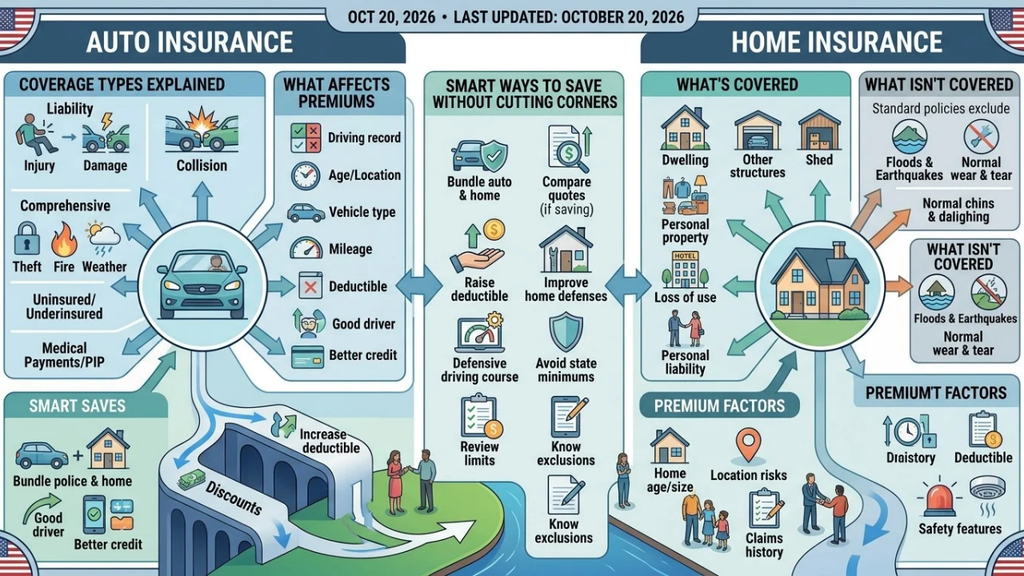
- Liability coverage: Pays for injuries and property damage you cause to other people. It does not pay for your own car or your own injuries. Most states require it, and you’ll usually see it written as three numbers, such as 50/100/50, meaning limits for injury per person, injury per accident, and property damage.
- Collision coverage: Pays to repair or replace your car after a crash, whether you hit another vehicle or an object like a fence or a pole.
- Comprehensive coverage: Covers damage from things other than a collision, such as theft, vandalism, hail, falling trees, fire, or hitting a deer.
- Uninsured and underinsured motorist coverage: Protects you if the other driver has no insurance or too little. Many drivers are surprised by how common this situation is.
- Medical payments or personal injury protection (PIP): Helps pay medical bills for you and your passengers after an accident, regardless of who was at fault. Requirements vary by state.
A quick note on limits. State minimums are designed to keep roads legal, not to protect your finances. A serious accident can easily cost more than a minimum policy pays, and you’d be responsible for the difference. Many people choose higher liability limits for that reason, especially if they own a home or have savings to protect.
If your car is older and not worth much, you might drop collision and comprehensive to save money. If you’re still making loan or lease payments, your lender will typically require both.
Home Insurance: What’s Covered and What Isn’t
The most common type of homeowners policy, often called an HO-3, bundles several protections together:
- Dwelling coverage: Pays to repair or rebuild the structure of your home after a covered event like fire, wind, or hail.
- Other structures: Covers things like a detached garage, fence, or shed.
- Personal property: Covers your belongings, such as furniture, electronics, and clothing, if they’re stolen or destroyed.
- Loss of use: Pays for hotel stays and extra living costs if you can’t live at home while repairs are done.
- Personal liability: Covers legal and medical costs if a visitor is hurt on your property or you accidentally damage someone else’s.
Now for the part many homeowners miss. Standard policies usually do not cover floods or earthquakes. Flood damage is typically handled through a separate policy, often through the National Flood Insurance Program or a private insurer. Earthquake coverage is a separate add-on too. Normal wear and tear, pests, and poor maintenance are also excluded. If you live near water or in a storm-prone area, ask your agent about flood and wind or hurricane deductibles before you need them.
Also pay attention to how your belongings are paid out. Actual cash value subtracts depreciation, so a five-year-old couch gets you much less than a new one costs. Replacement cost pays what it takes to buy a similar new item. Replacement cost usually costs a bit more in premium, but it often makes a real difference after a loss.
Finally, make sure your dwelling limit reflects what it would cost to rebuild your home today, not what you paid for it or what it might sell for. Rebuilding costs and market value are two very different numbers.
What Affects Your Insurance Premium
Two neighbors with similar cars or houses can pay very different prices. Insurers look at a mix of factors, and some are within your control.
For auto insurance, common factors include:
- Your driving record, including accidents and tickets
- Your age, years of driving experience, and where you live
- The make, model, and safety features of your vehicle
- How many miles you drive each year
- Your coverage limits and deductible
- In most states, credit-based insurance scores (a few states restrict this)
For home insurance, common factors include:
- Your home’s age, size, construction type, and roof condition
- Your location, including local weather risks and distance from a fire station
- Claims history on the property
- Your coverage limits and deductible
- Safety features such as smoke detectors, security systems, and storm shutters
Your deductible deserves special attention. It’s the amount you pay out of pocket before insurance kicks in. A higher deductible usually lowers your premium, but only choose one you could comfortably pay tomorrow. Saving a little each month doesn’t help if you can’t afford the deductible when a claim happens.
Rates have also been rising in many parts of the country because of repair costs, severe weather, and other pressures. That makes shopping around more important than ever.
Smart Ways to Save Without Cutting Corners
The goal isn’t the cheapest policy. It’s the best protection for the price. These steps can lower your bill without leaving gaps:
- Bundle your policies. Many companies offer a discount when you buy auto and home insurance together. Compare the bundled price against separate quotes to make sure it’s truly the better deal.
- Compare quotes every year or two. Loyalty isn’t always rewarded. Prices change, and a company that was cheapest three years ago may not be today.
- Raise your deductible carefully. Move to a higher deductible only if you have emergency savings to cover it.
- Ask about discounts. Common ones include good driver, good student, low mileage, safe-driver apps, multi-car, paperless billing, and automatic payments. For homes, look for discounts on security systems, newer roofs, and claims-free history.
- Keep your credit healthy. In most states, better credit can mean lower rates.
- Improve your home’s defenses. Updated wiring, a new roof, water leak sensors, and storm-resistant features can reduce risk, and sometimes your premium.
- Take a defensive driving course. Some insurers reduce rates for completing an approved class.
- Review coverage after life changes. Moving, getting married, paying off a car, or renovating your home are all good reasons to call your agent.
One warning: be wary of any plan that saves money by quietly lowering your liability limits or removing important coverage. A low price isn’t a bargain if it leaves you exposed.
Common Mistakes to Avoid
A few simple errors cause most of the regret people feel after filing a claim.
- Buying only the state minimum. It might keep you legal, but it rarely keeps you safe.
- Underinsuring your home. If your dwelling limit is too low, you could be left paying part of the rebuilding bill yourself.
- Assuming floods are covered. They usually aren’t under a standard homeowners policy.
- Skipping a home inventory. Walk through your house with your phone and record your belongings. It makes a claim far easier.
- Letting coverage lapse. A gap in auto insurance can raise your future rates and, in some states, bring fines.
- Not reading the exclusions. Take ten minutes to read what your policy says it will not pay for.
- Filing tiny claims out of habit. Claims can affect your premium, so think about whether a small repair is worth reporting.
- Hiding information on an application. Leaving out a driver, a business use, or a past claim can lead to a denied claim or a canceled policy.
The fix for most of these is simple: ask questions, read the summary page of your policy, and keep your agent updated when things change.
How to Compare Quotes and Choose a Company
Price matters, but it shouldn’t be the only thing you look at. Here’s a simple way to compare:
- Decide your coverage first. Pick your liability limits, deductibles, and extras before you ask for quotes, so every company is pricing the same thing.
- Get at least three quotes. Mix it up: ask a large national company, a smaller regional insurer, and an independent agent who can shop several companies for you.
- Compare line by line. Two quotes can look similar but differ in deductibles, limits, or exclusions.
- Check customer service and claims reputation. Look at your state insurance department’s complaint data and independent satisfaction surveys.
- Confirm the company’s financial strength. Rating agencies such as AM Best publish ratings that show how likely an insurer is to pay claims.
- Ask how claims work. Can you file online or by app? Is there a 24/7 claims line? How are repairs handled?
Your state’s department of insurance is also a useful, free resource. Most offer consumer guides, complaint lookups, and help if you have a dispute with your insurer.
When you’ve picked a company, don’t cancel your old policy until the new one is active. Even a one-day gap can cause problems.
Frequently Asked Questions
Is bundling auto and home insurance always cheaper? Not always. It often is, but it’s worth comparing a bundle against separate policies from different companies.
Will one claim raise my rates? It can, depending on the type of claim, who was at fault, and your insurer. Some companies offer accident forgiveness. Ask before you file.
What’s the difference between a deductible and a premium? The premium is what you pay to keep the policy active, monthly or yearly. The deductible is what you pay out of pocket when you make a claim.
Do I need renters insurance if I don’t own a home? It’s not the same as home insurance, but it’s a smart, low-cost way to protect your belongings and cover liability if you rent.
How often should I review my policies? At least once a year, and any time you move, buy a car, renovate, or have a major life change.
Final Thoughts
Auto and home insurance don’t have to be confusing. Start with the basics: know what each coverage does, choose limits that match what you could lose, and pick a deductible you can afford. Then shop around, ask about discounts, and review your policies every year.
A little time spent now can save you real money and real stress later. If you’re not sure where to begin, a licensed local agent or your state’s department of insurance can walk you through your options.
Disclaimer: This article is for general educational purposes only and is not personalized insurance, legal, or financial advice. Coverage, requirements, and prices vary by state and by company, so please review your own policy and speak with a licensed insurance professional about your situation.